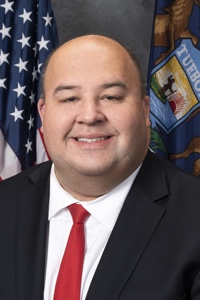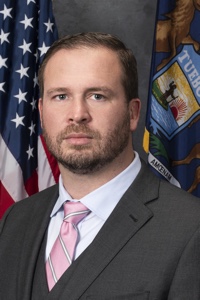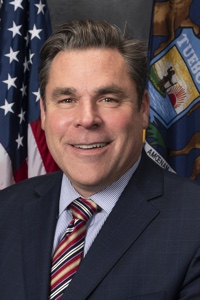
Upper Peninsula, Mich. — Sen. Ed McBroom and three U.P. state representatives spoke out on Tuesday against a recent administrative law judge ruling that will increase the cost of energy for U.P. residents and businesses. The ruling comes as the state Senate has failed to consider legislation — passed the state House with broad, bipartisan support earlier this year — that would stop the massive increases.
If and when approved by the Michigan Public Service Commission, the ALJ recommendation would cost customers of Upper Michigan’s Energy Resource Corporation over $10 million starting in January 2026 and nearly $13 million in 2027. UMERC has approximately 37,400 customers in the Upper Peninsula, and this huge rate increase will apply to residential, commercial and industrial customers, including Cleveland-Cliffs Tilden Mine. Cliffs employs approximately 900 individuals in Marquette County and is a major economic driver in the region.
“We know that something must be done to ensure people can afford to live and work in the U.P. Doing nothing is untenable,” said McBroom, R-Waucedah Township. “The ALJ ruling has only affirmed what the U.P. team has been saying since the new energy laws were passed last term. Doing nothing will mean higher costs for the people of the Upper Peninsula, the small businesses that serve our communities, and our large industries like mining and forest products which employ thousands across the region with good-paying jobs. Again, doing nothing is simply untenable.
The case before the MPSC stems from Michigan’s clean energy law that will require utilities to produce 100% clean energy by 2040. As a result of the law, it is expected that highly efficient, natural gas generators, called RICE units, that began operating in 2019 would be forced to retire early. Meanwhile, the costs of the retired RICE units would still need to be paid while adding the costs to construct massive amounts of new renewable power estimated to exceed $4 billion.
“No one can deny the effect Michigan’s clean energy law is going to have on our Upper Peninsula without immediate legislative intervention,” said Rep. Greg Markkanen, R-Hancock. “We call on leadership in the state Senate to immediately consider our bipartisan plan to protect the U.P. from devastating, unsustainable increases to electric bills resulting from the region’s unique energy landscape.”
The UMERC case pending at the MPSC illustrates the risk to the U.P. and shows the great need for reform bills sponsored by Bohnak and Prestin. The bills were approved by the House of Representatives with bipartisan support in May 2025 but are still awaiting action in the Senate. House Bills 4007 and 4283 would keep the Upper Peninsula’s RICE generators operational through the end of their lifecycle in 2049 in recognition of the RICE generators’ contribution to energy efficiency, emissions reductions and affordability in the U.P.
“As things stand now, there is nothing standing between the U.P. and devastating energy poverty,” said Rep. Dave Prestin, R-Cedar River. “If the Senate does not pass our RICE generator protection plan, businesses will close, people will move, and the U.P. as we know it will become completely upended. This plan isn’t just about energy; it’s about protecting every aspect of U.P. life from certain collapse.”
“Protecting our RICE generators was my chief legislative priority when I decided to seek state office,” said Rep. Karl Bohnak, R-Deerton. “I have not wavered from that goal. I ensured our RICE generator protection plan was one of the first bills introduced this year, and I secured significant bipartisan support for the plan every time it’s been considered for a vote. There is no question this is the most important fight the U.P. delegation faces right now, and we have no choice but to keep fighting until our bipartisan plan is signed into law by the governor.”
The RICE generators stabilized the area’s energy grid following the decommissioning of the Presque Isle and Shiras coal power plants in 2019. The state of Michigan partnered with WE Energies and Cliffs to construct the generators. They ensure reliability and provide stable, cost-effective power. Importantly, they ended an energy crisis that hit the U.P., which had cost ratepayers an additional $6 million per month. The newly constructed generators have a lifecycle through 2049 and have decreased U.P. power generation carbon dioxide emissions by over 70%.
The U.P. legislative team, along with other stakeholders, are asking for the bills to be passed by the senate and signed by the governor before the end of the year. Similar recognition and policy carve outs were granted to other areas of the state already.
“This threat to our energy and economic future cannot be overstated,” McBroom said. “Action must be taken soon.”
###