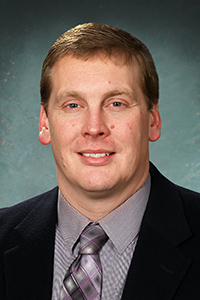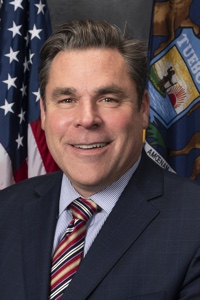
LANSING, Mich. — Sen. Mark Huizenga on Monday will host a roundtable discussion regarding his recently introduced bipartisan legislation that would create a framework for behavioral health transportation.
Who:
Sen. Mark Huizenga, R-Walker.
Rep. Steve Frisbie, R-Pennfield.
Mark Meijer, president of Life EMS.
Ken Morris, executive vice president of Life EMS.
Kraig Dodge, vice president of resource delivery at Life EMS.
Katie Arens, vice president of customer access at Life EMS.
Mike McKelvey, vice president of associate and community engagement services at Life EMS.
Steph Rahilly, deputy director of ancillary service delivery at Life EMS.
William Ward, executive director of Network 180.
Mark Eastburg, president and CEO of Pine Rest.
Kyle Hoffmaster, director of patient access at Pine Rest.
Jon Shiflett, director of government relations at Priority Health.
Christina Norgan, director of patient flow and capacity management at Corewell Health.
Sean Gehle, regional vice president of advocacy and government relations at Trinity Health.
Carrie Mull, administrative director of clinical operations at Trinity Health.
Mandy Bolter, director of government relations at University of Michigan Medicine.
When: 11 a.m. to 1 p.m. on Monday, June 8.
Where: Grand Rapids Chamber of Commerce, 250 Monroe Ave. NW, Suite 150, Grand Rapids.
Brief: Michigan currently doesn’t offer emergency medical transportation for people experiencing an acute mental health crisis. Individuals either wait for an ambulance or are transported by law enforcement.
Senate Bills 927 and 928, along with House Bills 5943 and 5944, which were introduced by Reps. Frisbie and O’Neal, seek to create a better solution by:
- Making behavioral health transportation, including interfacility transfers, psychiatric admissions and mental health evaluations, a Medicaid-covered service to lower costs for patients.
- Improving care for those experiencing a mental health crisis by creating a framework for safe transportation by trained professionals.
The purpose of Monday’s discussion is to outline the goals of the legislation and hear directly from those in the field about how that can be accomplished.
###