LANSING, Mich. — Sen. Mark Huizenga on Monday led a roundtable meeting with other lawmakers and various professionals and stakeholders from the medical community to discuss his legislation to create a framework for Behavioral Health Transportation in Michigan.
“This is a needed reform that would not only improve outcomes for patients, but also provide some relief for their pocketbooks, so it’s important we get this right,” said Huizenga, R-Walker.
“Having discussions with people — who are involved in these professions and see every day the shortfalls of current standards — gives us an excellent opportunity to work through potential improvements to the bills and maximize the positive effects this legislation will have.”
Michigan currently doesn’t offer emergency medical transportation for people experiencing an acute mental health crisis. Individuals are either transported by ambulance or law enforcement.
Senate Bills 927 and 928, along with House Bills 5943 and 5944, introduced by Reps. Steve Frisbie, R-Pennfield and Amos O’Neal, D-Saginaw, would make behavioral health transportation, including interfacility transfers, psychiatric admissions and mental health evaluations, a Medicaid-covered service.
The bills outline patient eligibility, how providers must operate and standards to ensure responsible use of taxpayer dollars while creating a transportation service that is focused on safety and enhanced training standards that keep both workers and patients safe. The measures include regulations for the vehicles used in mental health transports, as well as training requirements for transport workers, including mental health first aid, CPR, trauma-informed care, de-escalation techniques and other patient protections.
“We can certainly do better as a state when it comes to meaningful policy surrounding mental healthcare, and we’re working to establish a system that is better suited and more affordable when it comes these types of emergencies,” Huizenga said.
Frisbie agreed that something needs to be done to enhance care options and limit the use of local emergency response personnel. The representative, who spent years as a paramedic, said law enforcement and paramedics were never meant to be tasked with behavioral health transportation and the current system lacks in mental health-specific care and takes much-needed emergency resources out of the communities.
“Our plan truly delivers on principles demanded by our communities: lower costs and better care,” said Frisbie. “A core focus of the bills was ensuring that locals are not without necessary EMS services for long periods of time, while also ensuring our friends suffering from mental health crises receive the care they need. I am committed to working with both Democrats and Republicans to pass this critical legislation.”
Both lawmakers called Monday’s meeting a productive step forward and said they look ahead to continued discussions on the bill package.
“We are going to continue seeking input and fine-tuning this legislation to ensure it provides the best possible outcomes,” Huizenga said. “Today’s discussion jumpstarted efforts to a better, safer, more compassionate response when someone is facing a mental health crisis.”
###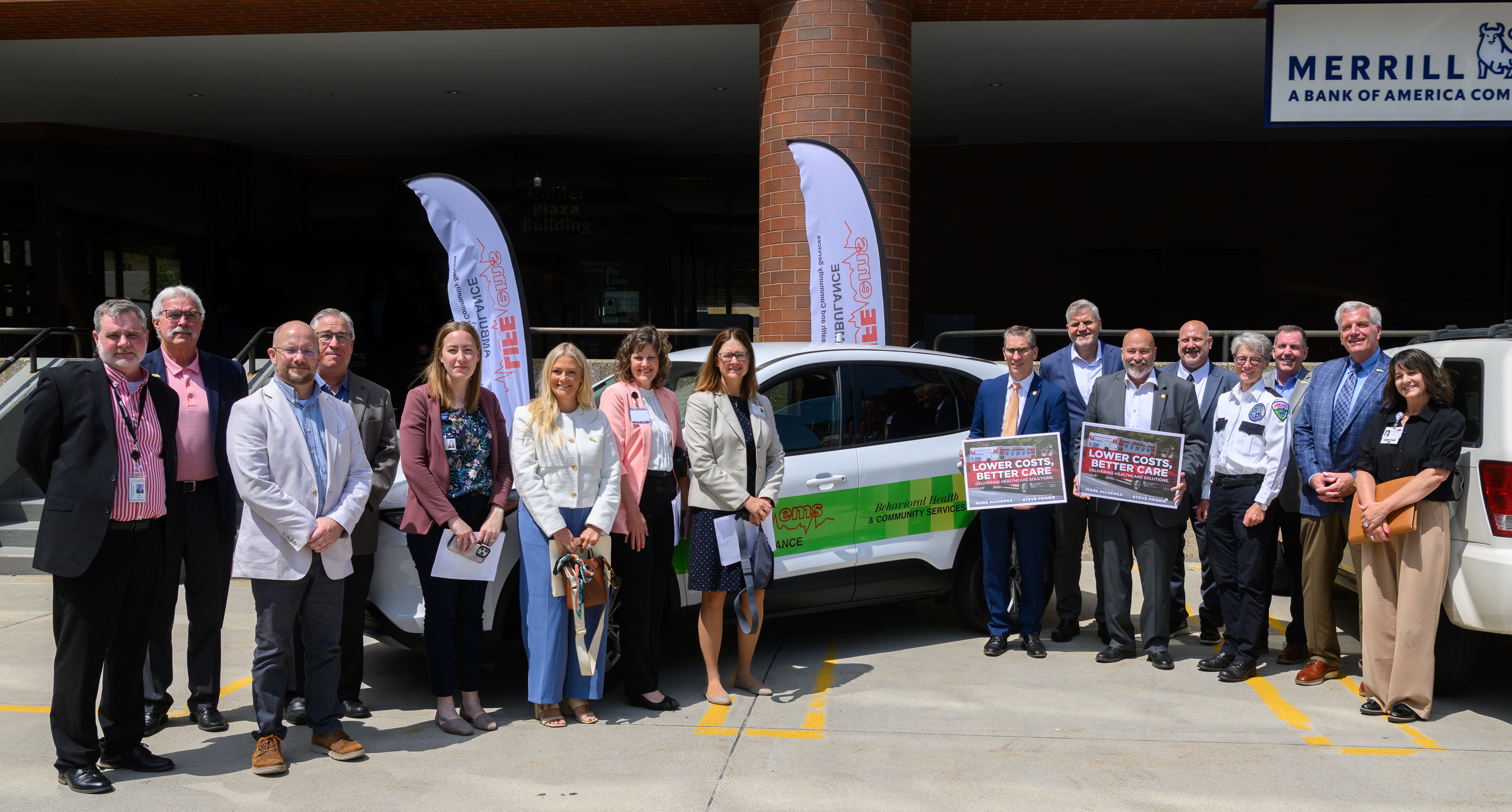
Editor’s note: Video clips of Monday’s discussion will be available at SenatorMarkHuizenga.com/video. A print-quality version of the above image is available on Huizenga’s website at SenatorMarkHuizenga.com/photos.
Photo caption: State Sen. Mark Huizenga, R-Walker, was joined by a coalition of medical and mental health professionals and stakeholders at a roundtable meeting in Grand Rapids to discuss new legislation aimed at creating a better and more affordable framework for behavioral health transports in Michigan.